
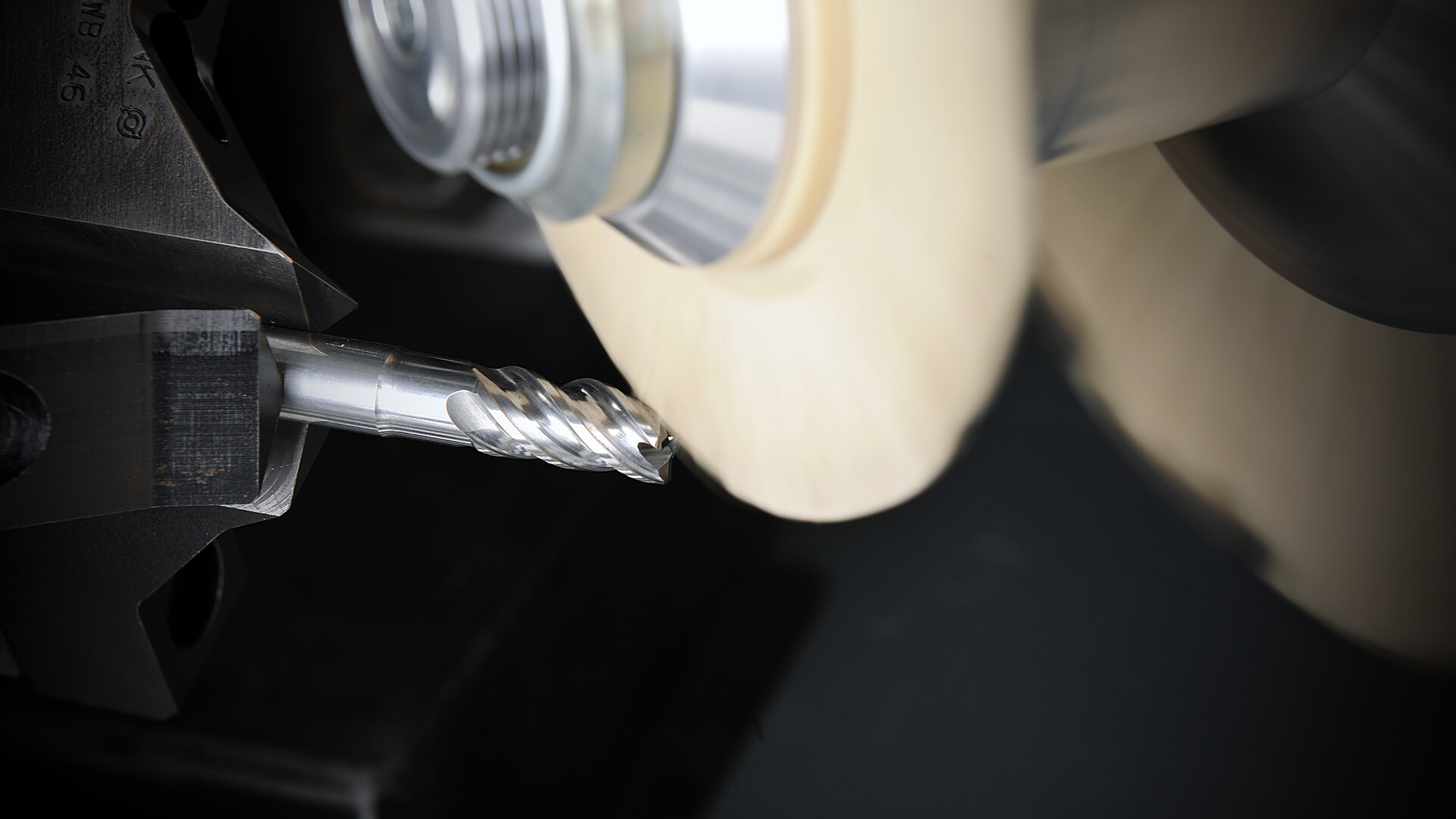
60 % longer
The FLAKKOTING-treated edge does not chip. It lasts — and that is proven.
+60 % tool life
FLAKKOTING-treated tungsten carbide cutting tools last 60 % longer in use than unprepared ones — proven in use at one of the largest tool manufacturers.
This is not a laboratory value: the comparison was made on series-production workpieces, same material, same cutting data, the only difference being the edge.
The figure lies in the middle of the window known to research: IFW Hannover reports up to 100 % longer tool life through edge preparation, individual studies +35 to +50 %. The decisive factor is the right radius — too little chips, too much increases forces and heat. That is exactly what MIKRO-KI is for.
Why the edge lasts

Without preparation
The ground edge is sharp but brittle. On entry it chips microscopically. Every chipping is a new weak point: wear accelerates, the coating flakes off, the surface of the workpiece suffers.
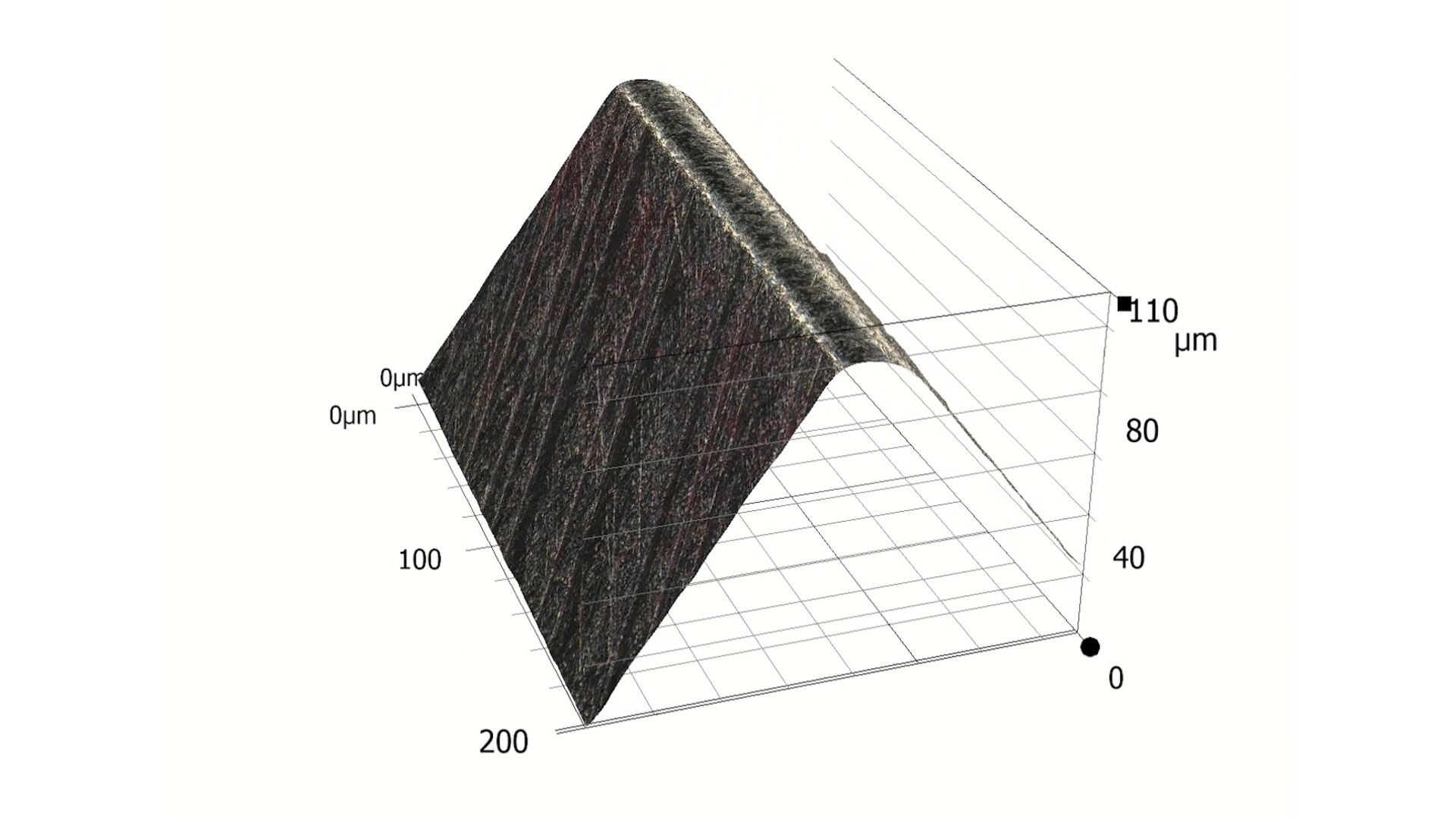
With FLAKKOTING
The edge is rounded to a defined radius — for example 30 µm, K-factor 1, the same on every cutting edge. It distributes the entry force, does not chip, guides the chip away cleanly. Wear sets in later and progresses evenly.
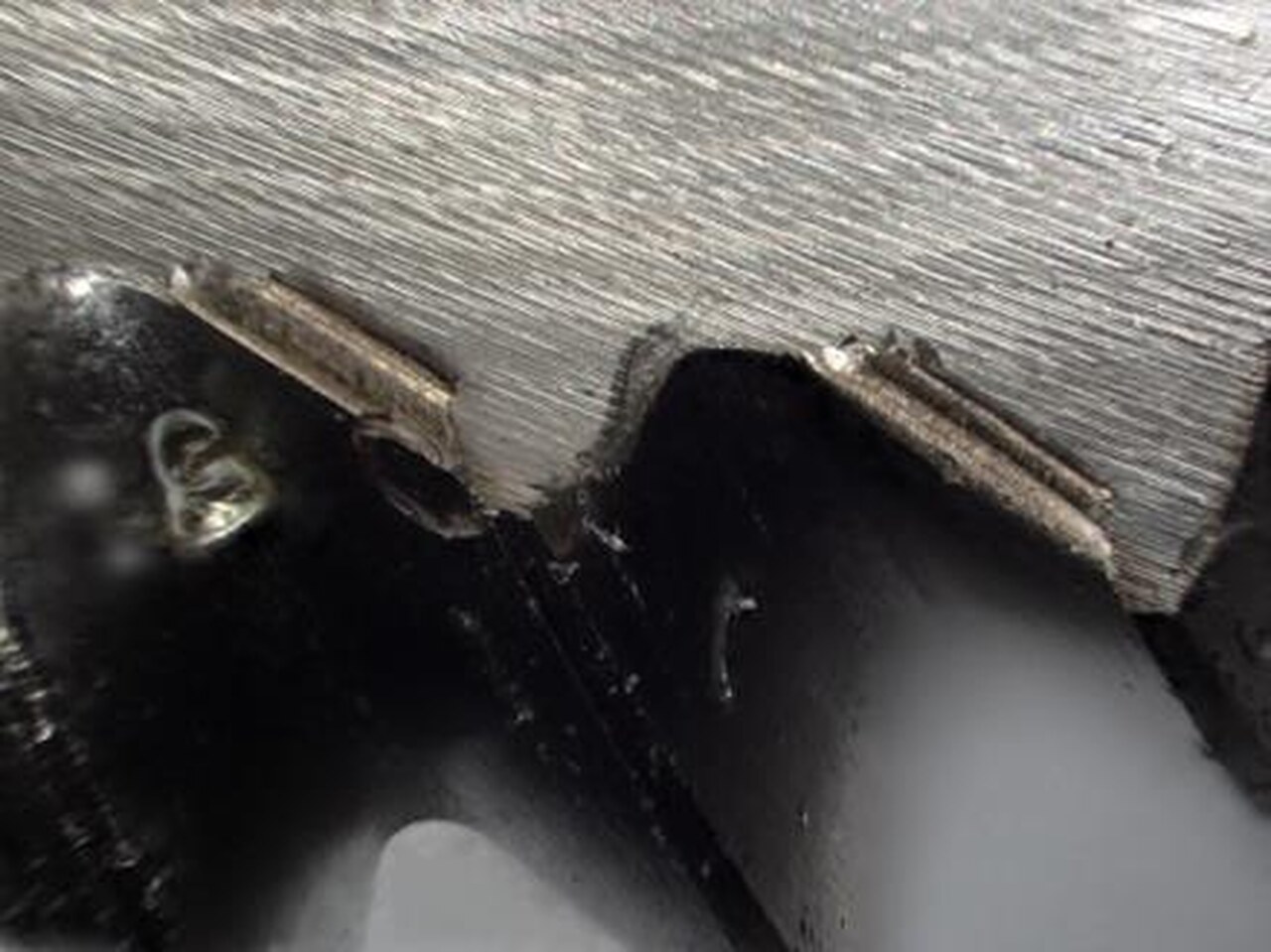
Burr on the blank
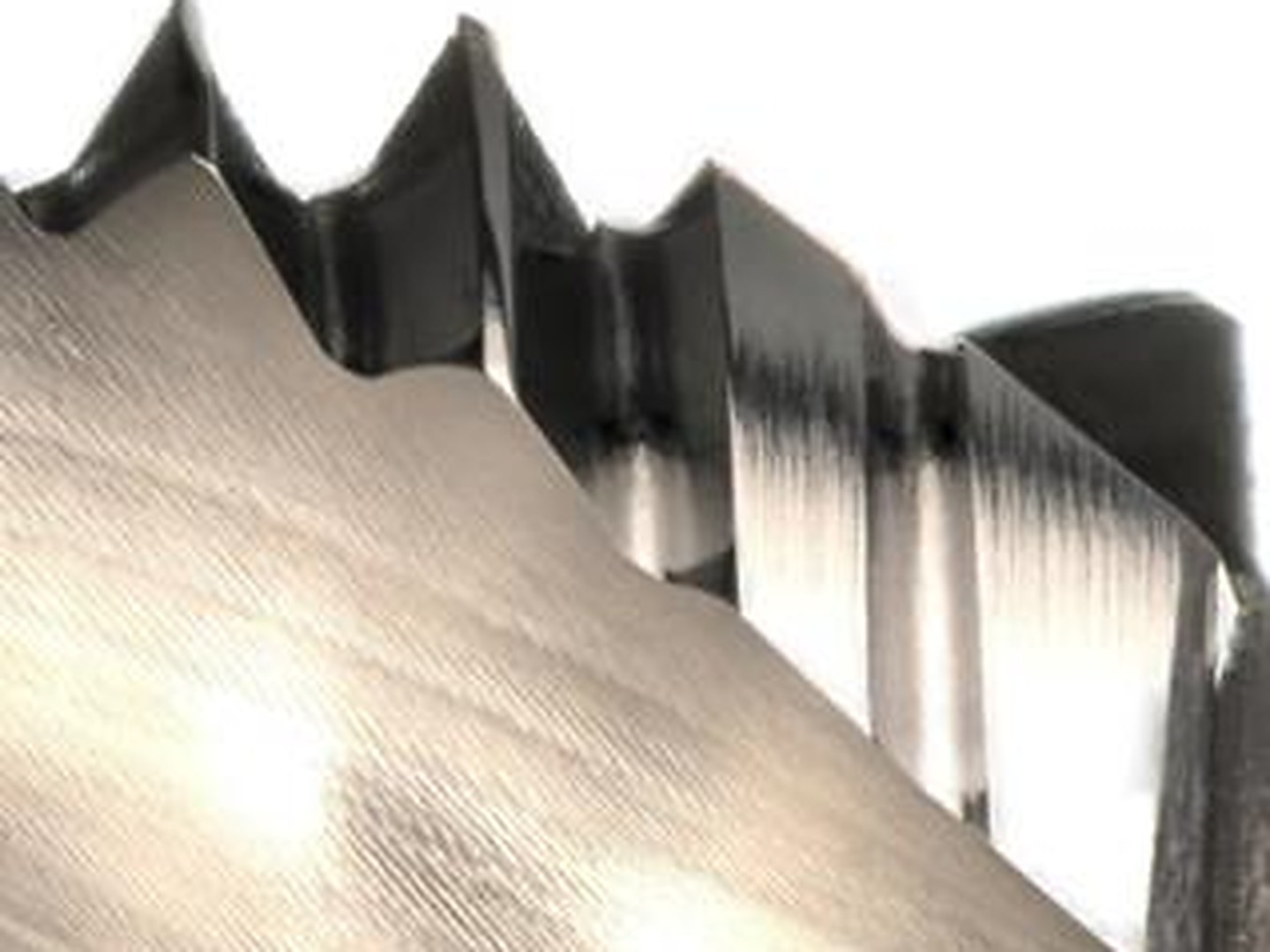
After FLAKKOTING
Every cutting edge the same
Tool life does not depend on the average, but on the weakest cutting edge. FLAKKOTING with MIKRO-KI prepares every main, corner and minor cutting edge to the specified radius — measured in µm, documented per workpiece. This reduces scrap in toolmaking and makes tool life predictable.