Sustainable machining
Tungsten carbide is scarce. The edge decides how much of it you need — the solution is FLAKKOTING.
The same work. One third fewer cutting tools.
60 % longer tool life means: the same machining volume takes only 62.5 cutting tools instead of 100. Every cutting tool saved is not bought, not reground, not transported and causes no production stoppages.
Sustainability does not start with recycling, but with the cutting tool that does not need replacing in the first place. Every workpiece is raw material. Four pages, one idea:
Carbide
Tungsten, cobalt, export controls: why the raw material has cost several times as much since 2026 — and what that means per workpiece.
Continue →Four advantages
Machining performance, tool life, surface, resources — each point explained in one sentence.
Continue →What the edge is worth
Calculate it for your business: Swiss francs, cutting tools and kilograms of carbide per year.
Calculator →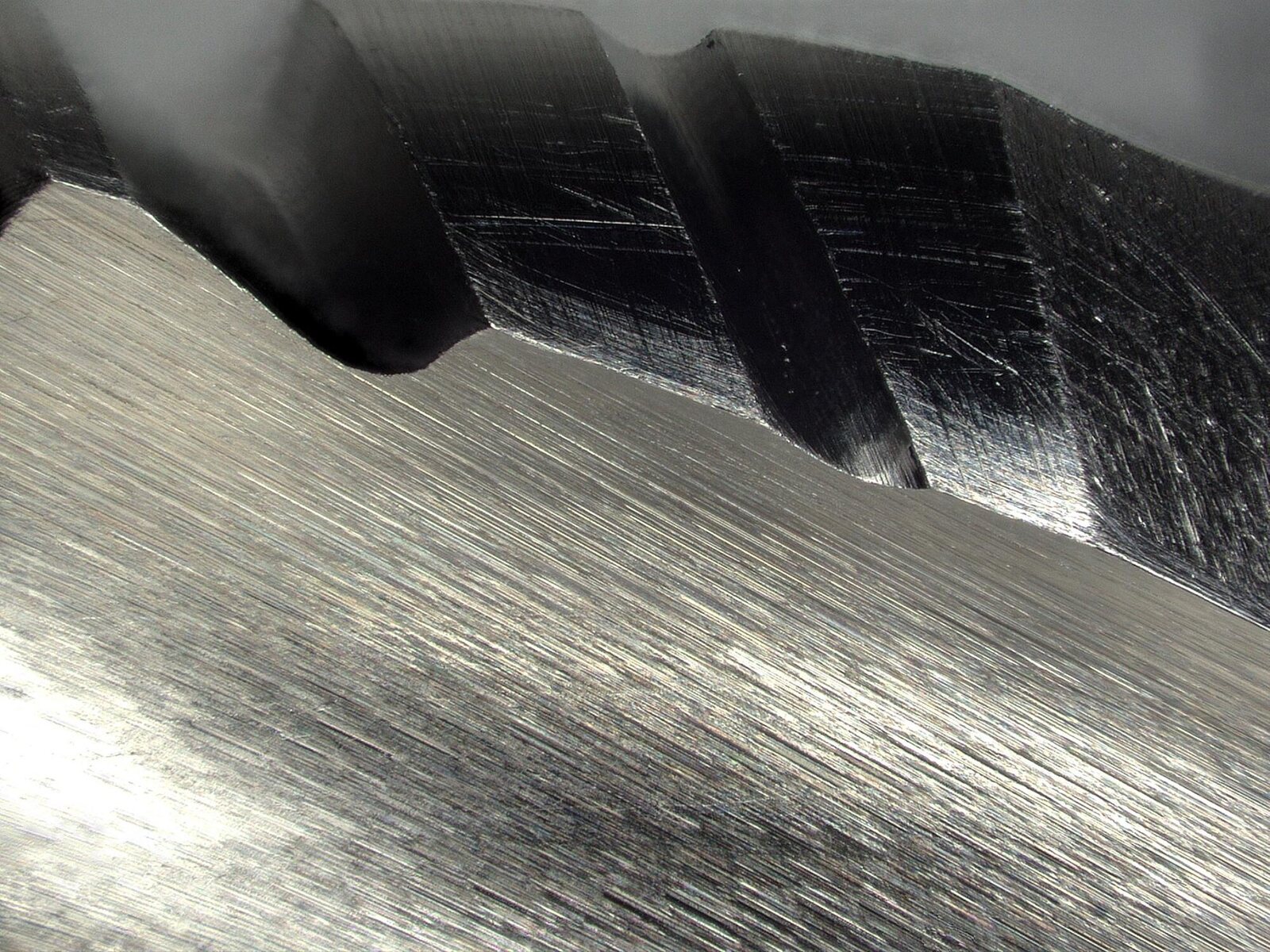
A few micrometres decide
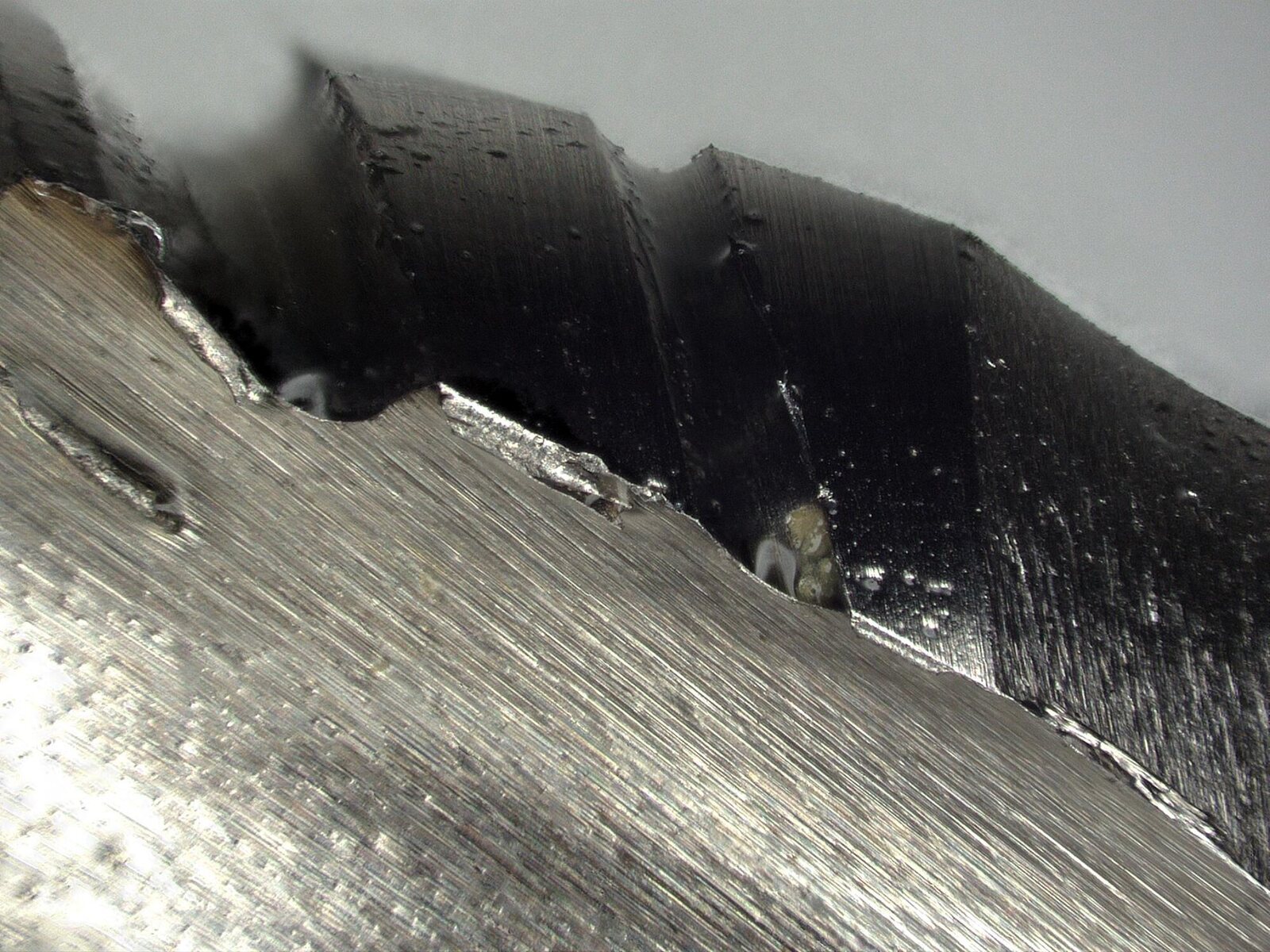
On entering the material, every cutting edge takes an impact. A sharp-ground carbide edge is only a few micrometres thick at this point — it chips microscopically. Every chipping is a new, uncontrolled edge: more friction, more heat, more wear, a poorer surface.
An edge rounded to a defined radius (for example 30 µm, K-factor 1) distributes the impact. It does not chip, guides the chip away cleanly, and the coating holds better on it.
One edge, two winners
The benefit is shared. Whoever manufactures or regrinds cutting tools sells a documented edge. Whoever machines with FLAKKOTING-treated cutting tools changes tools less often, has less downtime and produces less scrap.
- One third less carbide for the same machining work at the customer: 100 cutting tools become 62.5.
- Less scrap in your own production: a defined edge instead of a jagged one, every cutting edge the same — commercially available inserts vary by 20 to 50 µm along one cutting edge.
- A sales argument with a figure: radius, K-factor and tool life documented per workpiece. The data sheet replaces the promise.
- Regrinding at new-tool level: the reground drill gets the same edge as the new one.
- +60 % tool life in the customer test, up to +100 % in the technical literature: fewer tool changes, less downtime.
- Predictable wear instead of edge fracture: the change of cutting tools can be scheduled, less scrap and rework on the component.
- Process-reliable at high cutting values: uniform surfaces without chipping marks, Ra −30 % measured in drilling.
- Less raw material per component: 37 % fewer cutting tools bought, stored, transported, disposed of.
The solution is FLAKKOTING. What does that mean in Swiss francs?
Tool price, quantity, tool life — three figures, and you see your savings potential per machine and year.
To the calculator