Solutions
One method for edges, surfaces and contours. Two processes: programmed from experience or automated with INNOFLAKK. One machine family that contains both.
The difference at the edge


The surface finish by PROFIN
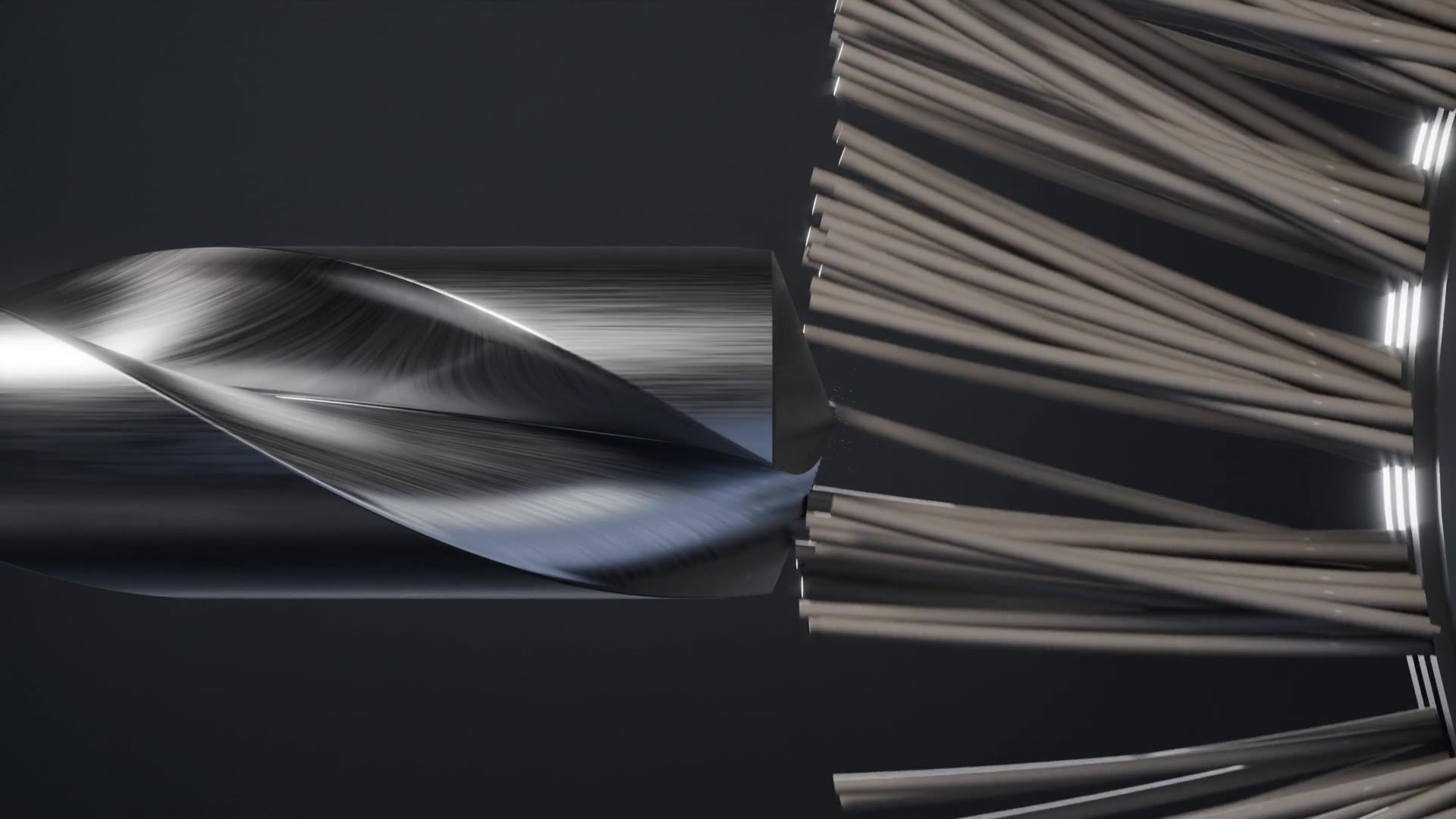
FLAKKOTING is the surface finish by PROFIN. Edges, surfaces and contours — cold, with diamond-impregnated filaments, accurate to the micrometre.
It comprises two processes:
- Classic surface finishing: deburring, polishing, edge rounding — with PROFIN FLAKKOTING tools, programmed from experience.
- INNOFLAKK: the automated FLAKKOTING process for cutting tools. The model MIKRO-KI determines the parameters, a dynamic process produces the path calculations — one for each cutting edge.
Both are built into the Key-2-Edge family — INNOFLAKK in your grinding machine as well.
Four levels, one method
From bottom to top: the tool, the K2E, on top of it INNOFLAKK with MIKRO-KI and path calculations, and the closed loop at the tip. Click on a level.
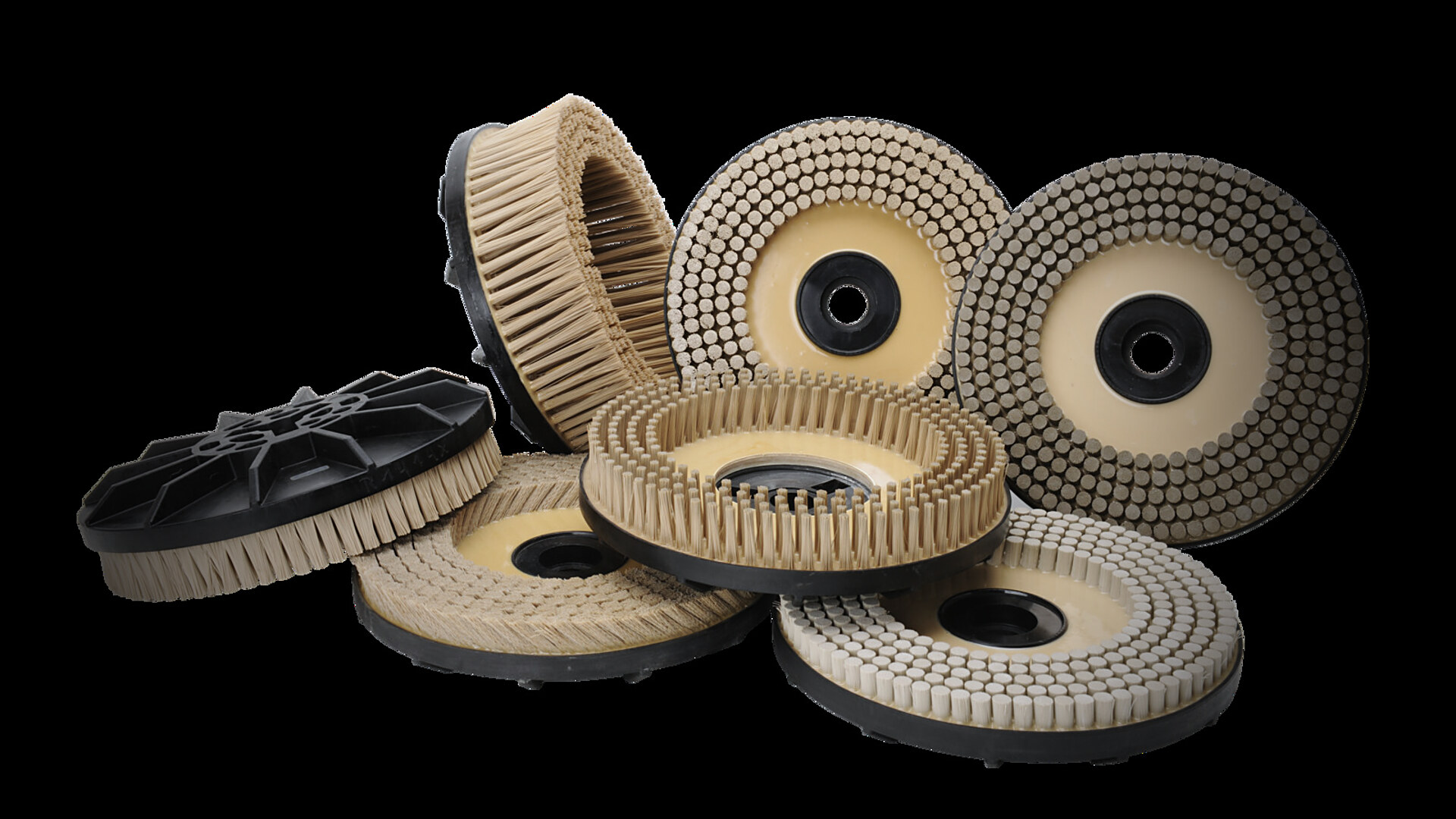
FLAKKOTING tools
Brushes with diamond filaments, made up in-house in the heart of Switzerland: circular and disc — designed for your workpiece (dimensions, filament, fill, grit). New: the rotary brush, patented (CH 720 766), and a disc generation with a new filament.
Who buys: every machine customer, continuously — the tool is a consumable.
The toolsK2E — Key-2-Edge
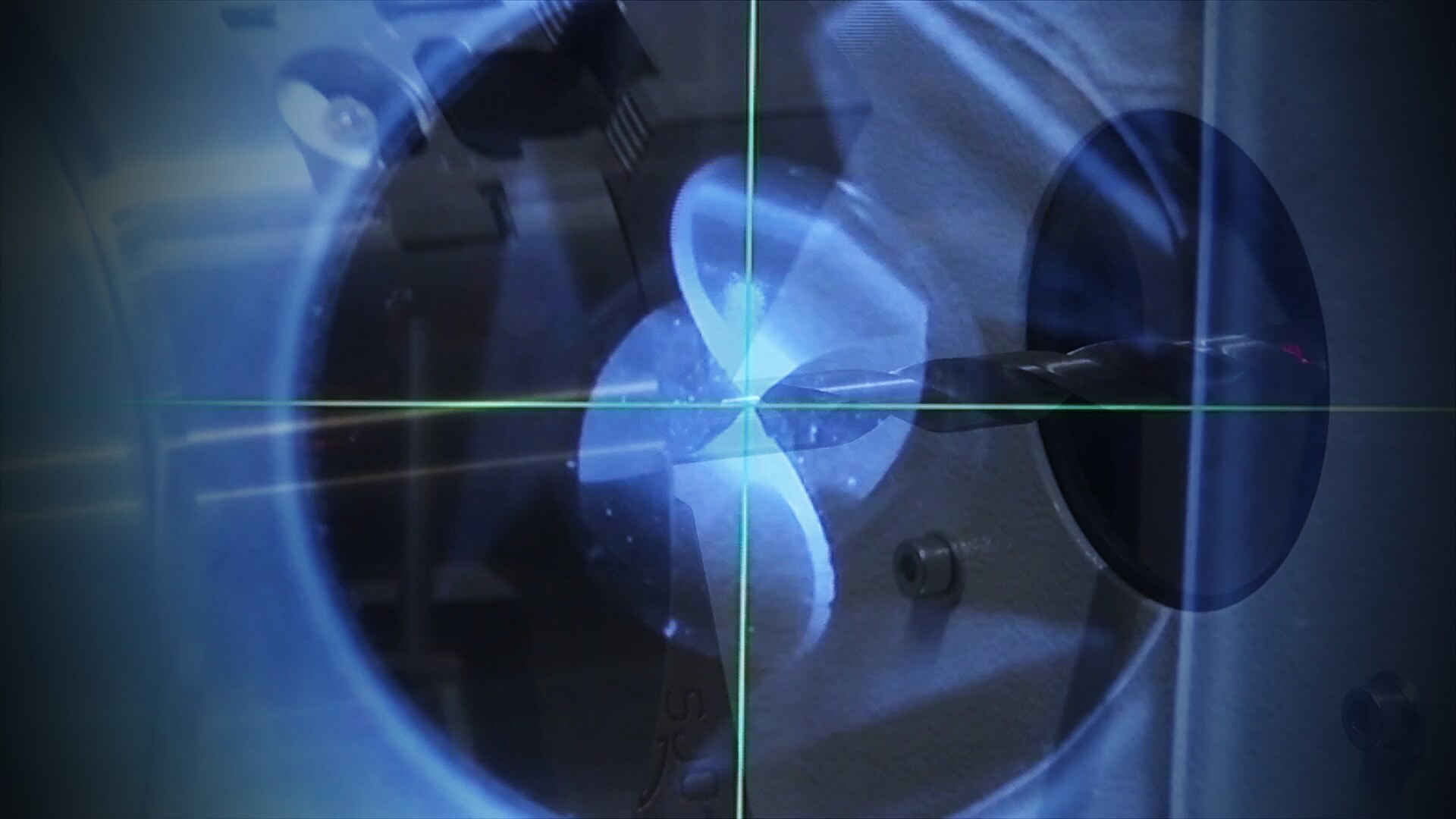
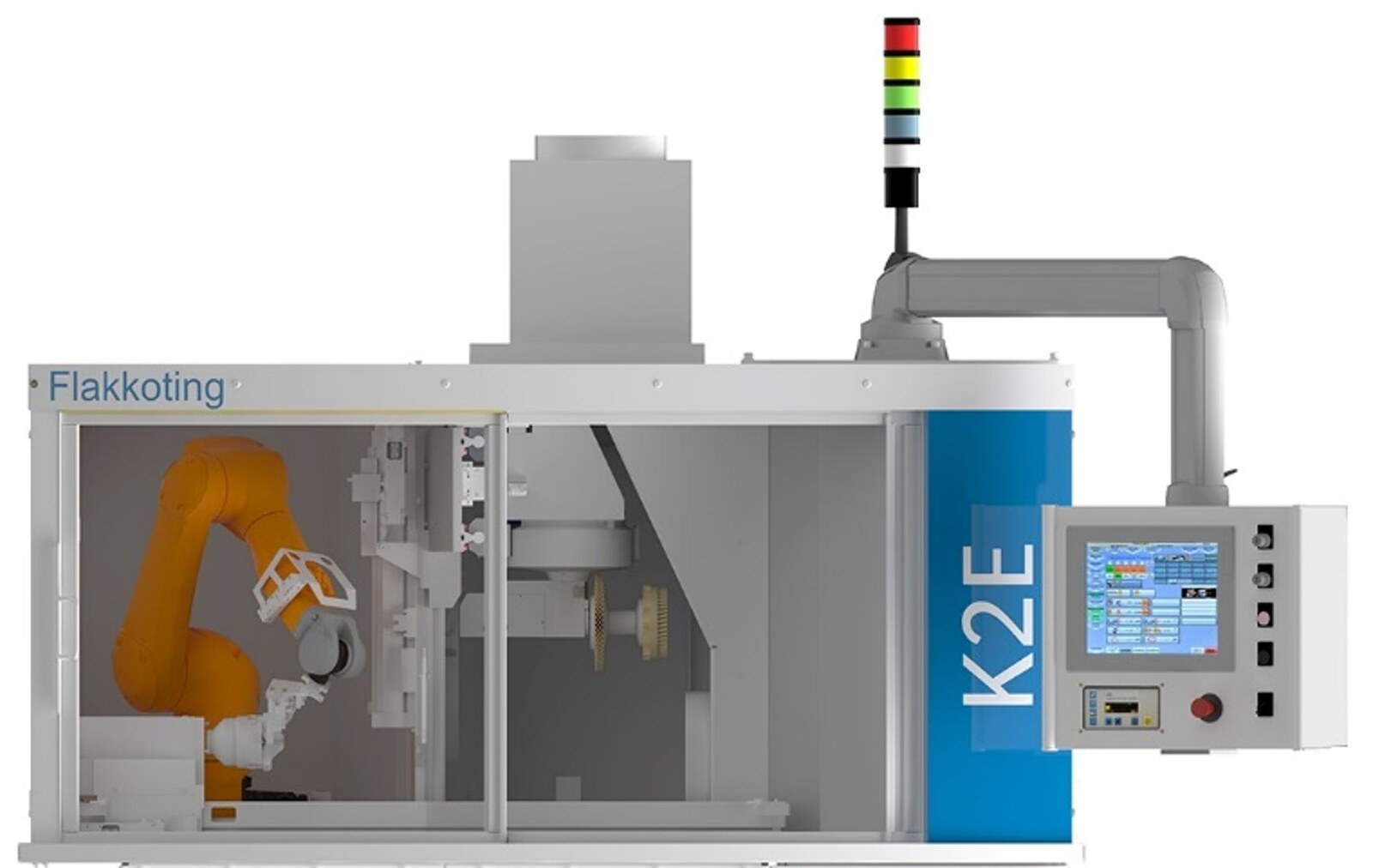
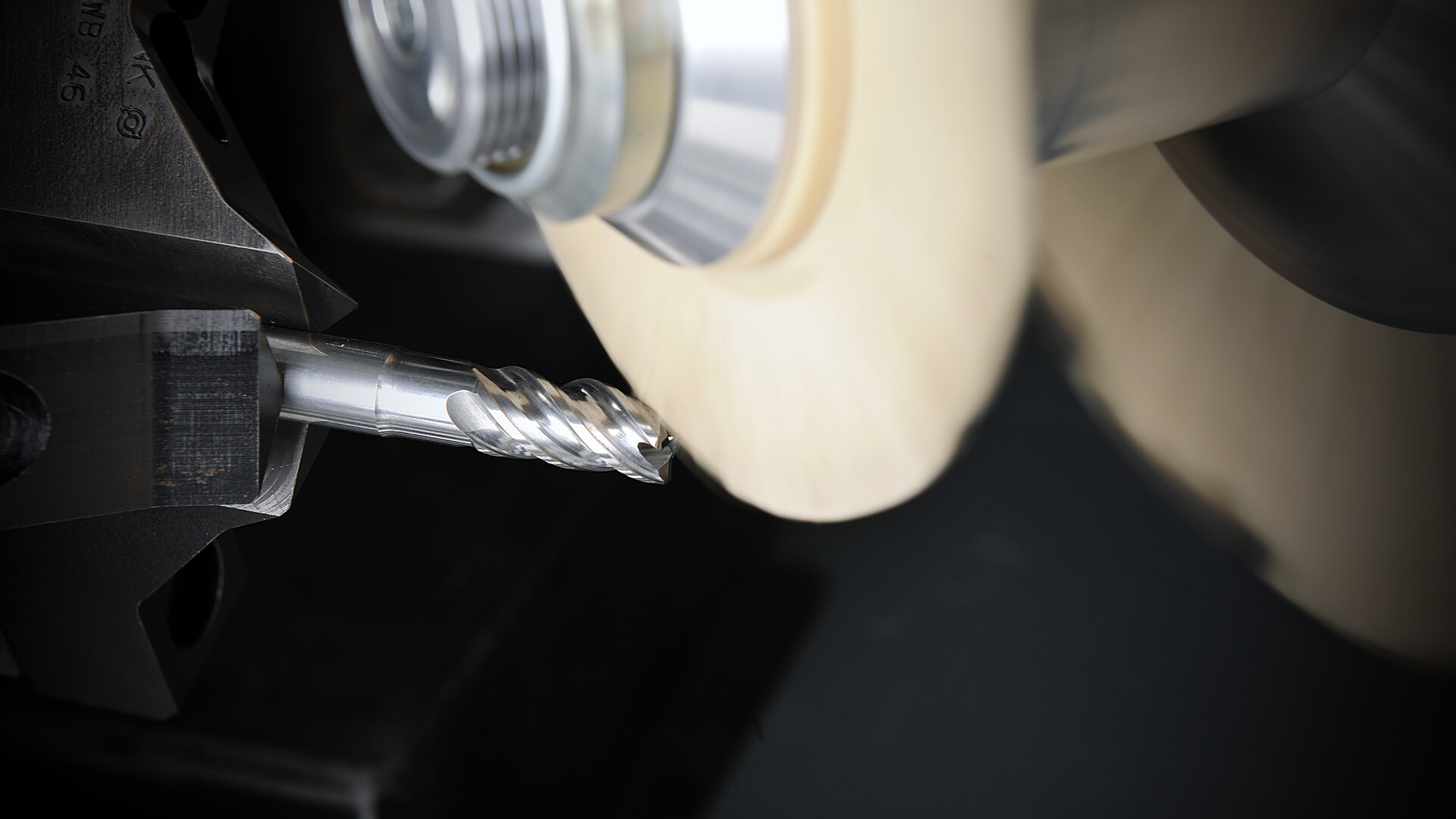
Key-2-Edge, the 6-axis edge centre: Vision-Control finds every cutting edge, Acoustic Emission measures the tool, model and path calculations are integrated in the control. Complex workpieces with many cutting edges in one set-up, 2–3 minutes. Configuration levels Hand, Ecco, Robo, Serie.
Who buys: cutting tool manufacturers and regrinding shops with complex workpieces.
To the K2EINNOFLAKK
The automated FLAKKOTING process for cutting tools. Enter the target edge, the model determines the parameters, the path calculations turn them into the path, one for each cutting edge. Every edge measured and documented. You buy INNOFLAKK as a whole — in the K2E or as software on your grinding machine.
Who buys: cutting tool manufacturers and regrinders who want every cutting edge identical and documented.
INNOFLAKKMIKRO-KI
A metamodel of the FLAKKOTING process, trained on several thousand measured edges: workpiece, tungsten carbide grade, target radius and K-factor in — FLAKKOTING tool, speed, immersion depth and time out. Radii from 3 to 80 µm, for each edge section.
Working title; the name is still to be decided.
The modelPath calculations
A dynamic process translates the parameters into machine paths — one path for each cutting edge, for the main, corner, minor and centre cutting edges and the flute. In the K2E directly in the control, for grinding machines via XML into your software.
Developed by PROFIN itself, can be used independently of the model.
The pathsClosed loop
The process that improves itself: a measuring system in the cell records the radius achieved without unclamping, actual against target for each edge section, and the measured values flow back into the model. The process compensates for tool wear, batch differences and new geometries by itself. Follow-up project with the research partners, approved and under way.
The control loopIn the grinding machine or in the K2E
| INNOFLAKK in the grinding machine | K2E — the edge centre | |
|---|---|---|
| Process time per workpiece | 10–40 seconds | 2–3 minutes and more |
| Workpieces | standard cutting tools, one FLAKKOTING tool | complex workpieces, many cutting edges, several FLAKKOTING tools |
| Where | in the finish of your grinding machine | separate cell, with a robot as the series solution |
| Who it is for | cutting tool manufacturers with a fleet of grinding machines | regrinding shops, cutting tool manufacturers with complex workpieces |
One edge, two winners
The benefit is shared. Whoever manufactures or regrinds cutting tools sells a documented edge. Whoever machines with FLAKKOTING-treated cutting tools changes tools less often, has less downtime and produces less scrap.
- One third less carbide for the same machining work at the customer: 100 cutting tools become 62.5.
- Less scrap in your own production: a defined edge instead of a jagged one, every cutting edge the same — commercially available inserts vary by 20 to 50 µm along one cutting edge.
- A sales argument with a figure: radius, K-factor and tool life documented per workpiece. The data sheet replaces the promise.
- Regrinding at new-tool level: the reground drill gets the same edge as the new one.
- +60 % tool life in the customer test, up to +100 % in the technical literature: fewer tool changes, less downtime.
- Predictable wear instead of edge fracture: the change of cutting tools can be scheduled, less scrap and rework on the component.
- Process-reliable at high cutting values: uniform surfaces without chipping marks, Ra −30 % measured in drilling.
- Less raw material per component: 37 % fewer cutting tools bought, stored, transported, disposed of.