
FLAKKOTING
The surface treatment for edges, surfaces and contours — cold, with diamond filaments, accurate to the micrometre.
The difference at the edge


A highly dynamic superfine grinding process
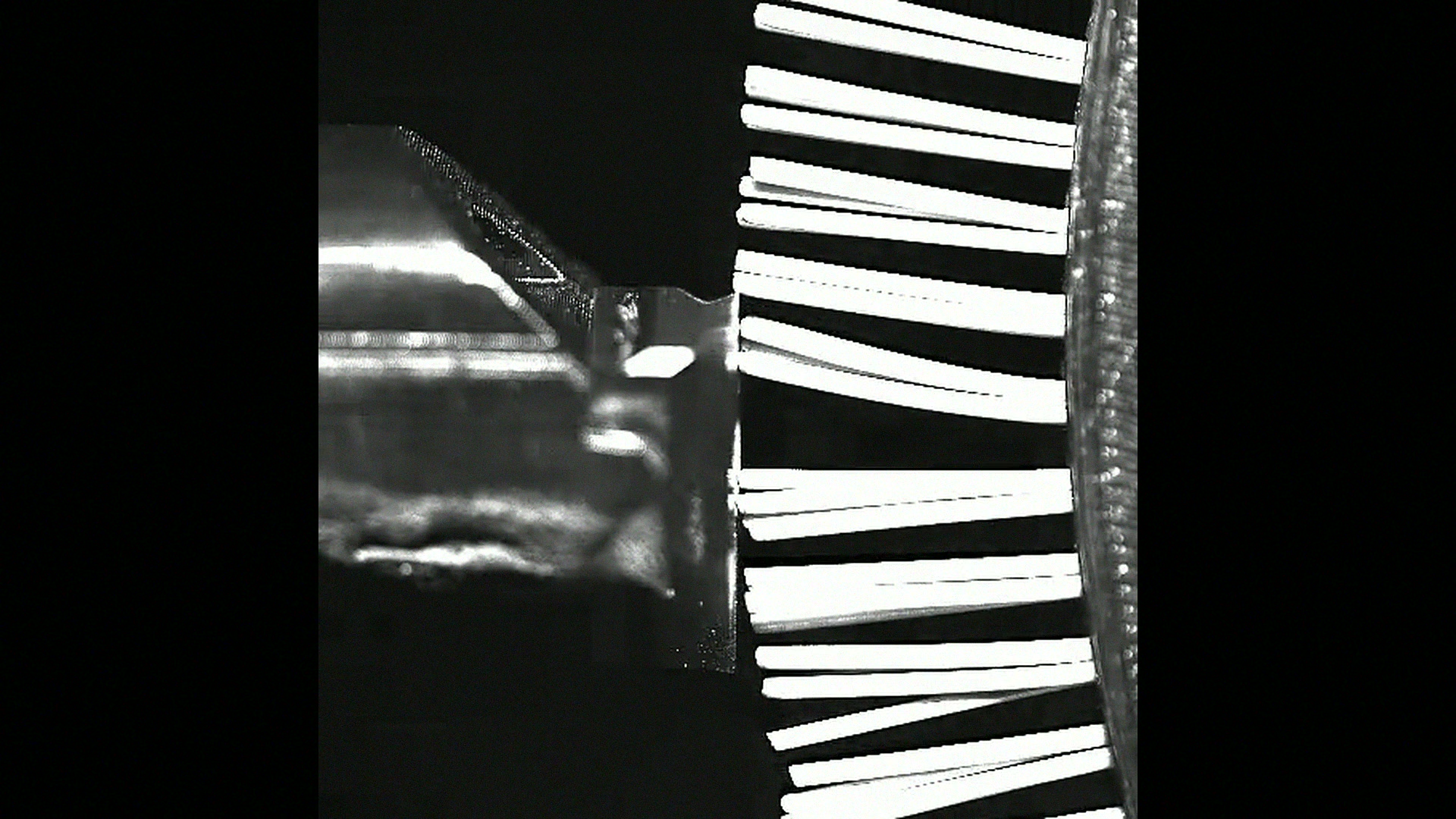
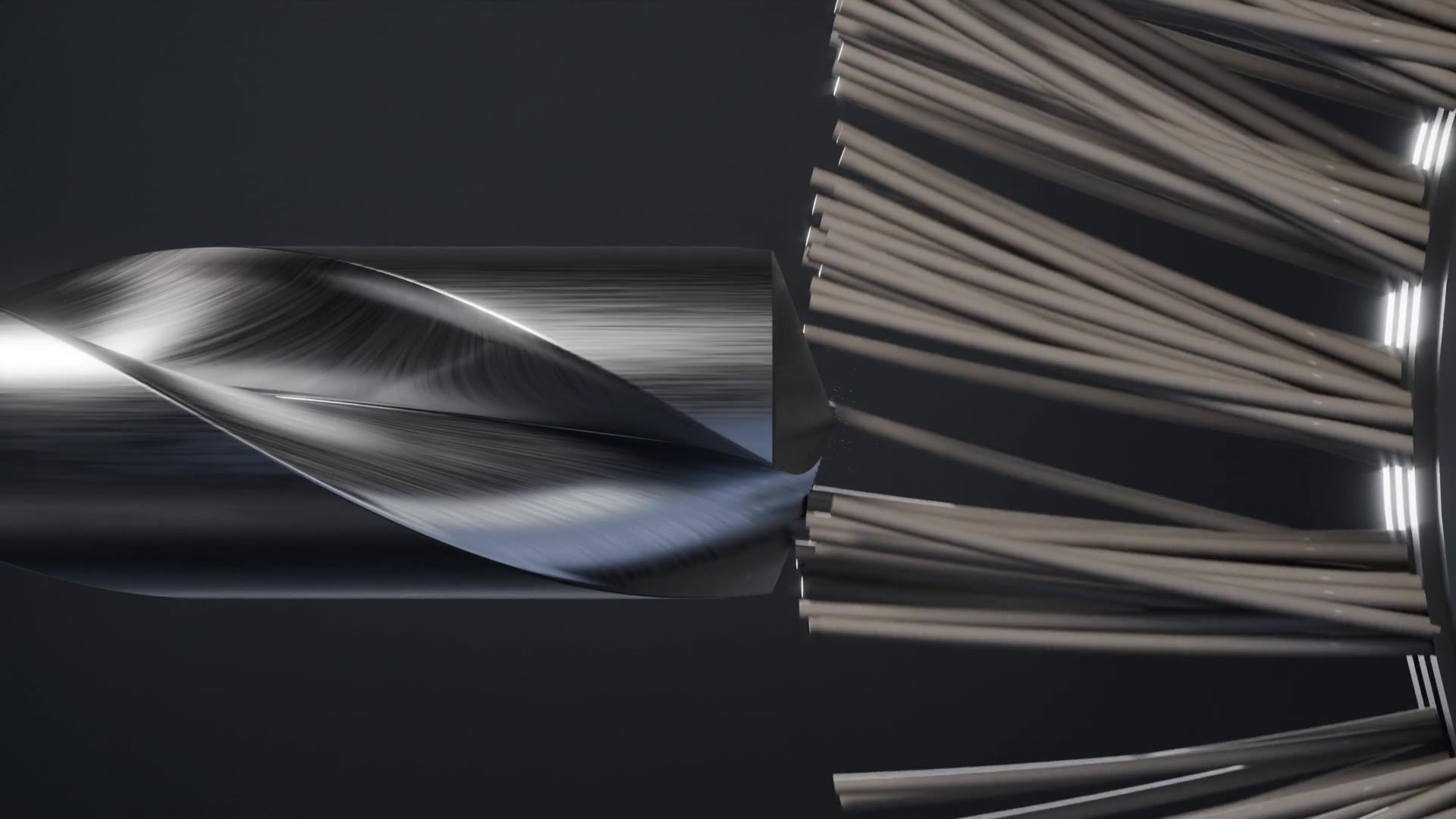
Rotating FLAKKOTING tools with diamond-impregnated filaments work on the cutting edge. Each filament removes material at the edge — controlled via speed, immersion depth, fill and grit.
Unlike blasting or drag finishing, FLAKKOTING acts selectively: the main, corner and minor cutting edges can be rounded differently, and the edge shape (radius, waterfall, trumpet) is specified via the K-factor. The process is cold — no thermal damage to the tungsten carbide — and can be run dry or wet.
- Radii 5–50 µm, K-factor 0.5–2.5 (indexable inserts up to 3.5)
- Repeatability ±3–7 µm
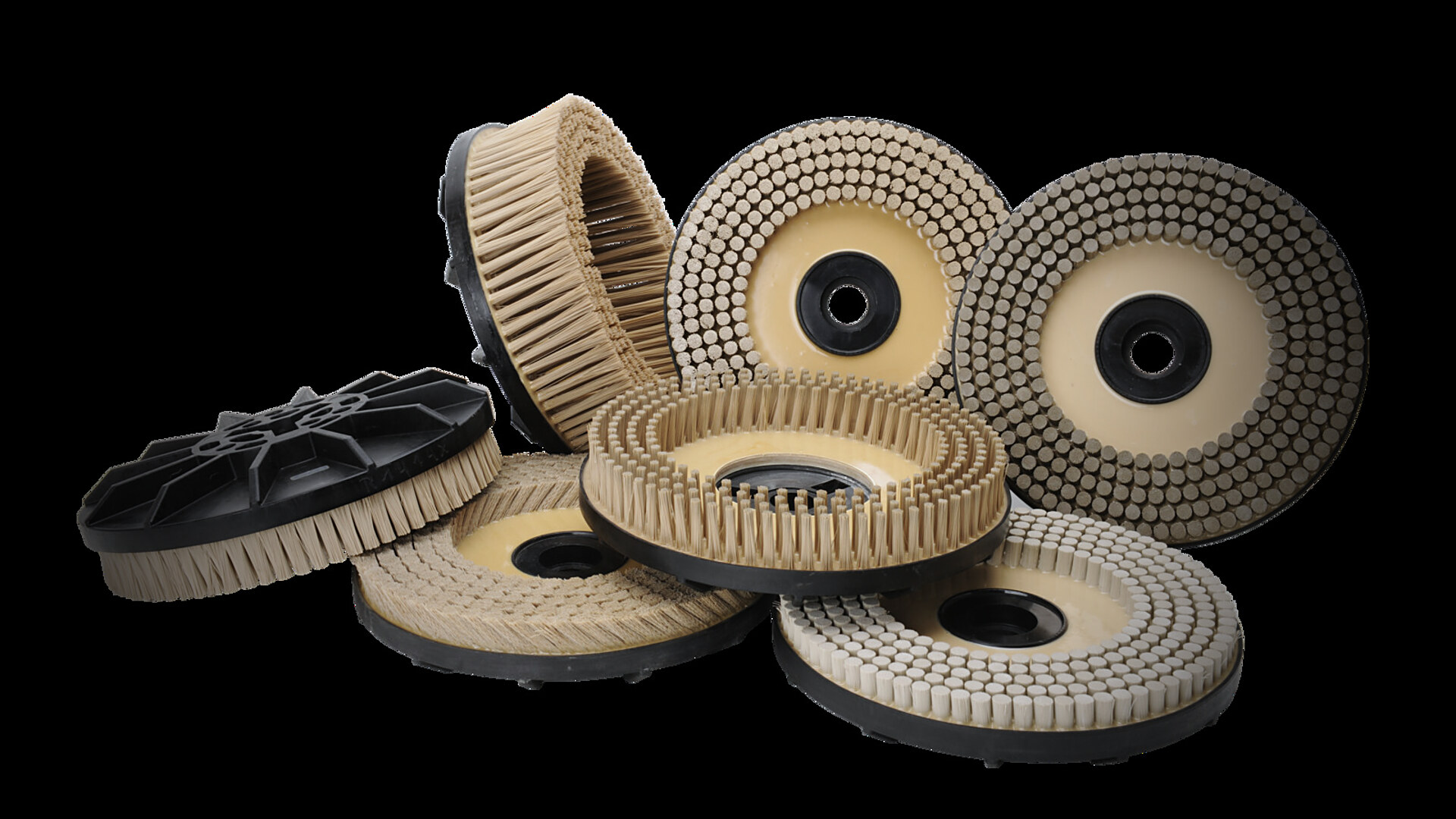
- FLAKKOTING tools: circular and disc, made up in-house in the heart of Switzerland
- Rotary brush patented (CH 720 766)
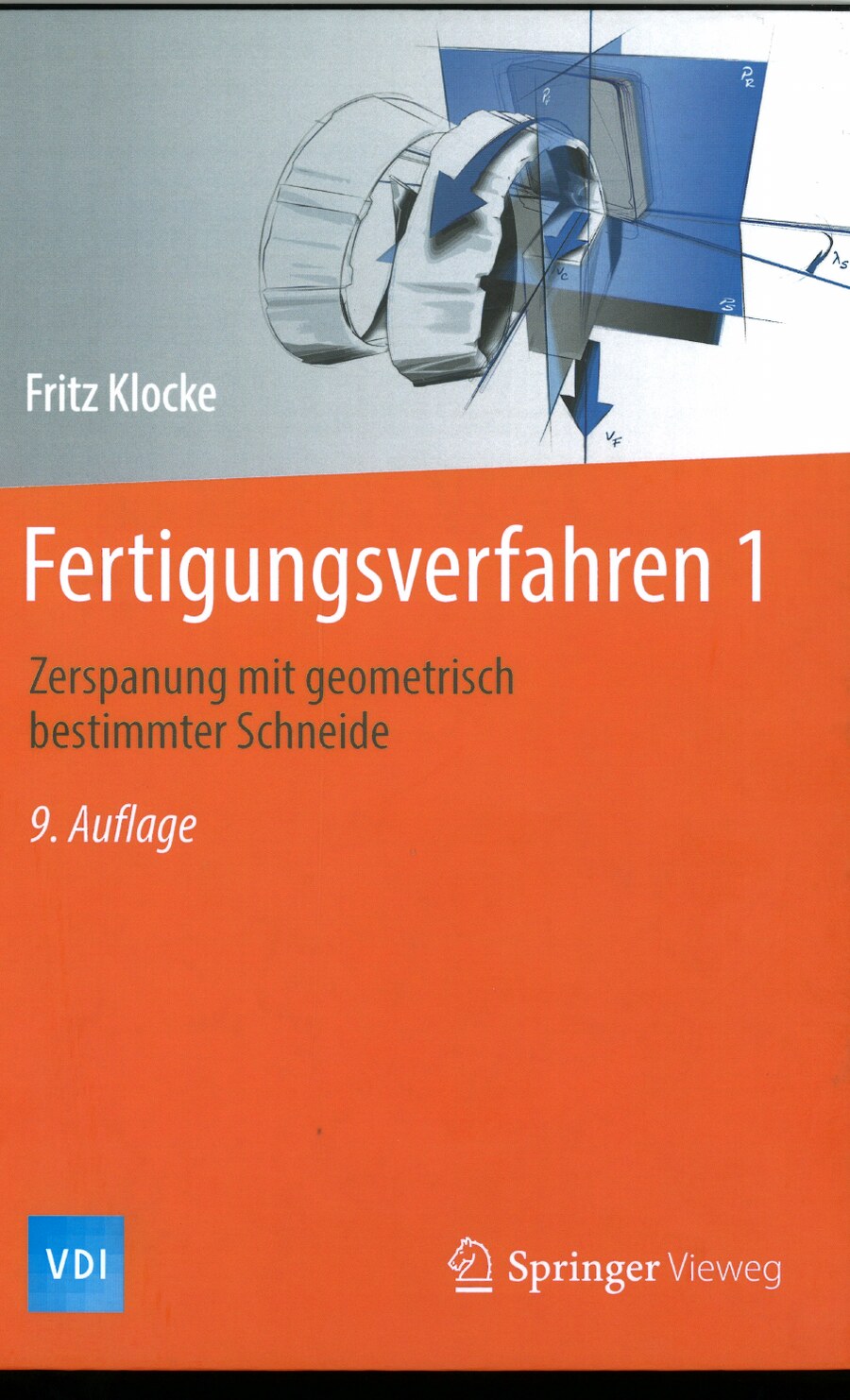
FLAKKOTING is in the standard reference work on machining
Fritz Klocke, “Fertigungsverfahren 1 — Zerspanung mit geometrisch bestimmter Schneide”, lists FLAKKOTING as a preparation method in its own right — alongside drag finishing, brushing, blasting and magnetic finishing.
Chapter 5 “Cutting edge preparation”, section 5.3.3 “FLAKKOTING”: “A further development of brushing is high-precision brushing, which is also called FLAKKOTING.” The method sets itself apart “from conventional brushing through special tools, improved process monitoring and more precise process control”. With this book, engineers at universities learn how to characterise the cutting edge — radius, K-factor, Sγ and Sα.
- Klocke, F.: Fertigungsverfahren 1. 9th edition, Springer Vieweg, Berlin 2018
- ISBN 978-3-662-54206-4 · ch. 5.3.3, p. 239, fig. 5.9 “Machine technology for FLAKKOTING (source: Profin AG)”
- Application example p. 248: milling of Inconel 718 with FLAKKOTING-treated cutting edges
Programmed from experience — or automated with INNOFLAKK
Surface finishing
The classic process: deburring, polishing, edge rounding — on edges, surfaces and contours, with PROFIN FLAKKOTING tools, programmed from experience. In any brushing machine, in the K2E, in your grinding machine.
The FLAKKOTING tools →
INNOFLAKK
The automated FLAKKOTING process: MIKRO-KI determines the parameters, the path calculations produce the path for each cutting edge. INNOFLAKK NEXT closes the loop with measurement in the cell.
Next: INNOFLAKK →Not every radius is the same
K = 1 · Radius
Symmetrical rounding. Universal, robust against chipping.
K < 1 · Waterfall
More material removal towards the flank face. For tough materials and high feed rates.
K > 1 · Trumpet
More material removal towards the rake face. For hard materials, stable cutting edge.
From empirical value to model
PROFIN investigated FLAKKOTING with inspire in the Innosuisse project INNOFLAKK: high-speed camera, process forces, 3D microscopy of the edge before and after the process, several thousand measured edges — and the number keeps growing. This gave rise to MIKRO-KI — the model that predicts the process.
Next: INNOFLAKKOne edge, two winners
The benefit is shared. Whoever manufactures or regrinds cutting tools sells a documented edge. Whoever machines with FLAKKOTING-treated cutting tools changes tools less often, has less downtime and produces less scrap.
- One third less carbide for the same machining work at the customer: 100 cutting tools become 62.5.
- Less scrap in your own production: a defined edge instead of a jagged one, every cutting edge the same — commercially available inserts vary by 20 to 50 µm along one cutting edge.
- A sales argument with a figure: radius, K-factor and tool life documented per workpiece. The data sheet replaces the promise.
- Regrinding at new-tool level: the reground drill gets the same edge as the new one.
- +60 % tool life in the customer test, up to +100 % in the technical literature: fewer tool changes, less downtime.
- Predictable wear instead of edge fracture: the change of cutting tools can be scheduled, less scrap and rework on the component.
- Process-reliable at high cutting values: uniform surfaces without chipping marks, Ra −30 % measured in drilling.
- Less raw material per component: 37 % fewer cutting tools bought, stored, transported, disposed of.